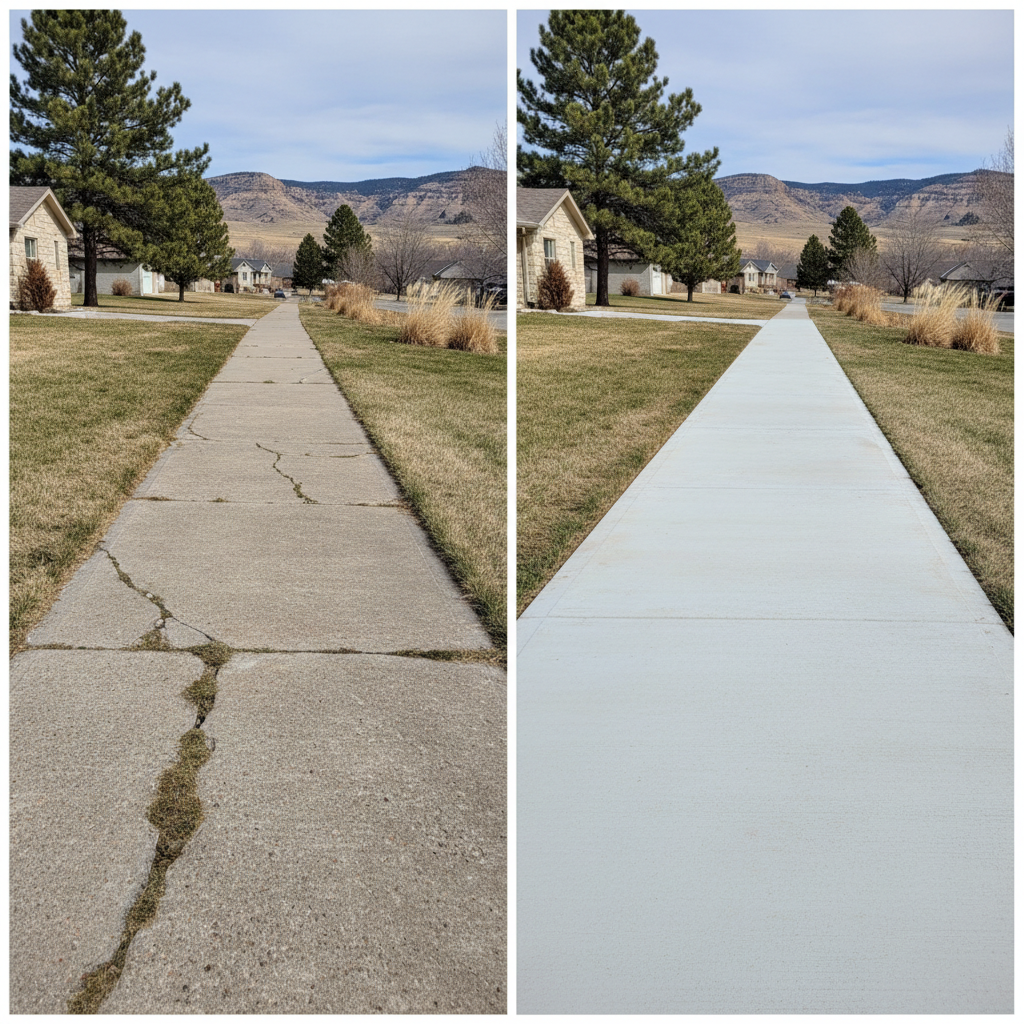
You're looking at putting in a new sidewalk or replacing an old, cracked one around your Rapid City home. Good for you. A solid, good-looking path makes a huge difference, both for curb appeal and just getting around safely. But then you hit the big question: do you go with classic poured concrete, or are those interlocking pavers a better bet? It's a common dilemma, and I see folks wrestle with it all the time. Let's talk about what you really need to know.
Poured Concrete Sidewalks: The Tried and True
When most people think of a sidewalk, they're picturing poured concrete. It's what we've used for generations, and for good reason. It's strong, relatively simple, and gets the job done.
- Cost: Generally speaking, poured concrete is going to be your more budget-friendly option upfront. Less labor involved compared to laying individual pavers, and the material cost is usually lower per square foot. We're talking about a significant difference, especially on a bigger project.
- Durability: A properly installed concrete sidewalk, with good sub-grade prep and the right mix, is incredibly durable. It can handle heavy foot traffic, bicycles, even light vehicle loads if it's thick enough. However, here in Rapid City, we deal with some serious freeze-thaw cycles. That's concrete's biggest enemy. If water gets into tiny cracks and freezes, it expands, making those cracks bigger. You'll see this especially in older neighborhoods like those around West Boulevard, where sidewalks have seen decades of winters.
- Maintenance: Pretty low maintenance. Keep it clean, maybe seal it every few years to protect against moisture and stains. If a crack develops, you can patch it, but it's tough to make a patch blend in perfectly. If a section heaves or sinks due to soil movement (which can happen with our clay soils), you're often looking at cutting out and replacing that whole section.
- Appearance: It's a classic, clean look. You can get different finishes – broom finish for grip, smooth for a sleeker look. You can also add color or stamps to mimic other materials, but that adds to the cost and complexity. It's a consistent, monolithic surface.
Interlocking Pavers: The Flexible Alternative
Pavers have gained a lot of popularity over the last couple of decades, and for good reason. They offer a different aesthetic and some unique advantages.
- Cost: This is where pavers usually lose out on the initial investment. The material itself is often more expensive per square foot, and the labor involved in laying each individual paver, cutting them, and compacting the base is significantly higher. Expect to pay more upfront.
- Durability: Pavers are incredibly strong individually. Because they're individual units, they have a bit more flexibility than a solid slab. This means they can tolerate some ground movement and freeze-thaw cycles better than poured concrete without cracking. If one paver gets damaged, you can usually just pop it out and replace it. The key to their durability is the base – a well-prepared, compacted gravel and sand base is absolutely critical. Without it, they'll shift and settle unevenly.
- Maintenance: Generally low. You'll need to sweep them occasionally to keep the sand in the joints, and sometimes you might need to add more joint sand. Weeds can sometimes sprout between pavers, which can be a minor nuisance. If a paver gets stained or damaged, it's easy to replace just that one. This is a big plus when you're thinking about repairs down the line.
- Appearance: This is where pavers really shine for a lot of homeowners. You've got a huge variety of shapes, sizes, colors, and textures. You can create intricate patterns, borders, and really customize the look to match your home's style. From a rustic stone look to a more modern, geometric pattern, the options are almost endless.
My Recommendation for Rapid City Homeowners
Alright, so which one should you go with? If you're on a tight budget and you want a straightforward, functional path, a well-installed poured concrete sidewalk is a perfectly good choice. Just make sure your contractor (like us at Alpha Concrete) does proper sub-grade preparation, uses control joints correctly, and a good concrete mix. That's how you'll minimize cracking and heaving over the years, especially with our Rapid City winters.
However, if your budget allows for it, I'm generally going to lean towards interlocking pavers for sidewalks here in the Black Hills. Why? Our climate. That constant freezing and thawing is brutal on solid concrete slabs. The flexibility of pavers, their ability to move slightly with the ground without cracking, and the ease of repairing individual units makes them a really smart long-term investment. Yes, the upfront cost is higher, but the reduced risk of major cracking and the simpler repairs often make up for it in the long run. Plus, you get that fantastic aesthetic versatility.
Ultimately, it comes down to your priorities: budget, aesthetics, and how much you want to worry about potential repairs down the road. Both can be great options, but understanding their strengths and weaknesses in our specific environment is key to making the right choice for your home.